Roof emergencies rarely happen at a convenient time, but the actions you take in the first few hours can significantly reduce property damage and repair costs. Whether your roof has been damaged by a storm, a fallen tree, or a sudden leak, following the right emergency roof repair checklist helps protect your home until professional repairs can be completed.
At R3 Roofing, we’ve responded to countless emergency roof repairs across Brisbane. One thing we’ve consistently found is that homeowners who act quickly often avoid much larger structural repairs. The goal during a roofing emergency isn’t to permanently repair the roof yourself—it’s to keep your family safe, minimise further damage, and arrange professional assistance as soon as possible.
This guide explains exactly what to do during a roofing emergency and what mistakes you should avoid.
If your roof has been damaged, follow these steps immediately.
Never climb onto a damaged roof during or immediately after severe weather.
Stay away from:
Move furniture, electronics, and valuables away from active leaks if it is safe to do so.
Use buckets or containers to collect dripping water and minimise internal damage.
Inspect the property safely from ground level.
Look for:
Arrange an emergency roof inspection as soon as possible.
Professional roofers can safely assess both visible and hidden damage before carrying out repairs.
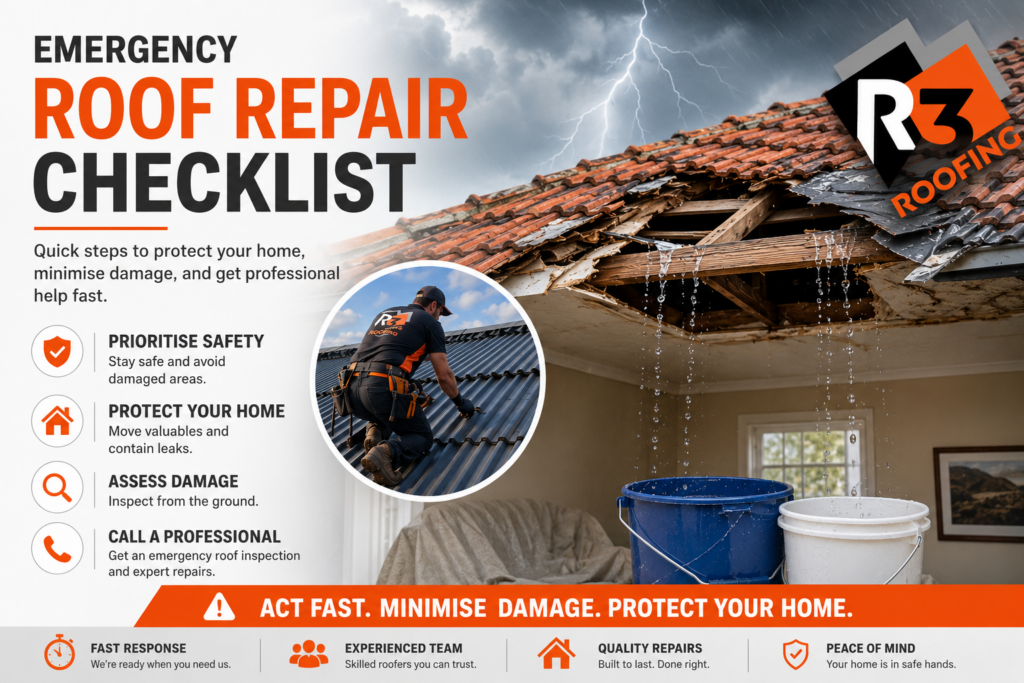
During a roof emergency, prioritise safety, protect your belongings, inspect visible damage from the ground, and contact a professional roofing contractor immediately.
Not every roofing issue requires immediate emergency attention.
Situations that should be treated as emergencies include:
These situations require prompt professional attention to prevent further damage.
Roofing emergencies include active leaks, storm damage, fallen trees, structural movement, major roof openings, and water entering the home.
The first few minutes are critical.
We recommend the following:
Avoid rushing onto the roof.
If water is near electrical fittings, switch off power to affected areas if it is safe to do so.
Take photographs from safe locations.
These images may assist with insurance claims.
Place buckets beneath leaks and remove valuable belongings from affected rooms.
Temporary measures help reduce damage, but permanent repairs should always be completed by qualified roofing professionals.
After discovering roof damage, focus on safety, document the damage, protect your belongings, and arrange professional repairs as soon as possible.
Although permanent repairs should be left to professionals, you can often reduce additional damage.
Helpful steps include:
Never attempt unsafe repairs during severe weather.
Protecting the inside of your home is often the safest and most effective temporary response.
Temporary measures such as collecting water, moving valuables, and improving ventilation help minimise internal damage until professional repairs begin.
Many homeowners unintentionally increase damage by attempting unsafe repairs.
Avoid:
Even if the leak appears small, hidden structural damage may already exist.
Avoid climbing onto damaged roofs, attempting unsafe repairs, or delaying professional inspections during a roofing emergency.
Gathering useful information helps speed up the inspection process.
Check for:
If possible, note when the leak began and whether it only occurs during heavy rain.
This information helps identify the likely source more efficiently.
Document visible interior and exterior damage before the roofer arrives to assist with faster diagnosis and repair planning.
Storms and roof leaks often create hidden damage that homeowners cannot safely identify.
Professional roof inspections assess:
Many roofing emergencies involve damage beneath the roof surface that remains invisible from the ground.
A complete inspection ensures nothing is overlooked.
Professional inspections identify both visible and hidden roof damage, ensuring repairs address the entire problem rather than only obvious symptoms.
Preventative maintenance remains the most effective strategy.
We recommend:
Small repairs completed early are almost always less expensive than emergency roof repairs.
Routine maintenance and regular inspections significantly reduce the likelihood of unexpected roofing emergencies.
Contact a roofing professional immediately if you notice:
At R3 Roofing, our priority during an emergency is to stabilise the situation, identify the full extent of the damage, and provide long-term repair solutions that restore your roof’s integrity.
Call an emergency roofing professional immediately for active leaks, storm damage, structural concerns, or major roof failures to minimise further property damage.
Roof emergencies require quick thinking, but they also require the right response. Protecting your family, reducing internal damage, and arranging a professional roof inspection should always be your top priorities.
While temporary measures can help limit immediate damage, permanent roof repairs should always be carried out by experienced professionals. At R3 Roofing, we help Brisbane homeowners respond quickly to roofing emergencies, identify hidden damage, and restore their roofs with safe, reliable, and long-lasting repair solutions.
Prioritise safety. Stay off the roof, move your family away from dangerous areas, protect your belongings from water damage, and contact a professional roofer. We've attended many emergency call-outs where attempting DIY repairs created additional safety risks.
Yes, if water is actively entering your home. Even a relatively small leak can quickly damage ceilings, insulation, timber framing, and electrical systems, especially during continued rainfall.
No. Wet roofing materials, loose tiles, and hidden structural damage make storm-damaged roofs extremely dangerous. A professional inspection is always the safest option.
Only if it can be done safely without climbing onto the roof. For example, placing buckets under leaks and moving valuable items away from affected areas helps reduce damage while you wait for professional repairs.
As soon as possible. The longer water continues entering your roof, the greater the risk of structural damage, mould growth, and more expensive repairs.
Because many forms of storm damage remain hidden. We've inspected roofs that appeared undamaged from the ground but had lifted flashing, cracked tiles, and hidden water penetration that would have caused major problems during the next rainfall.