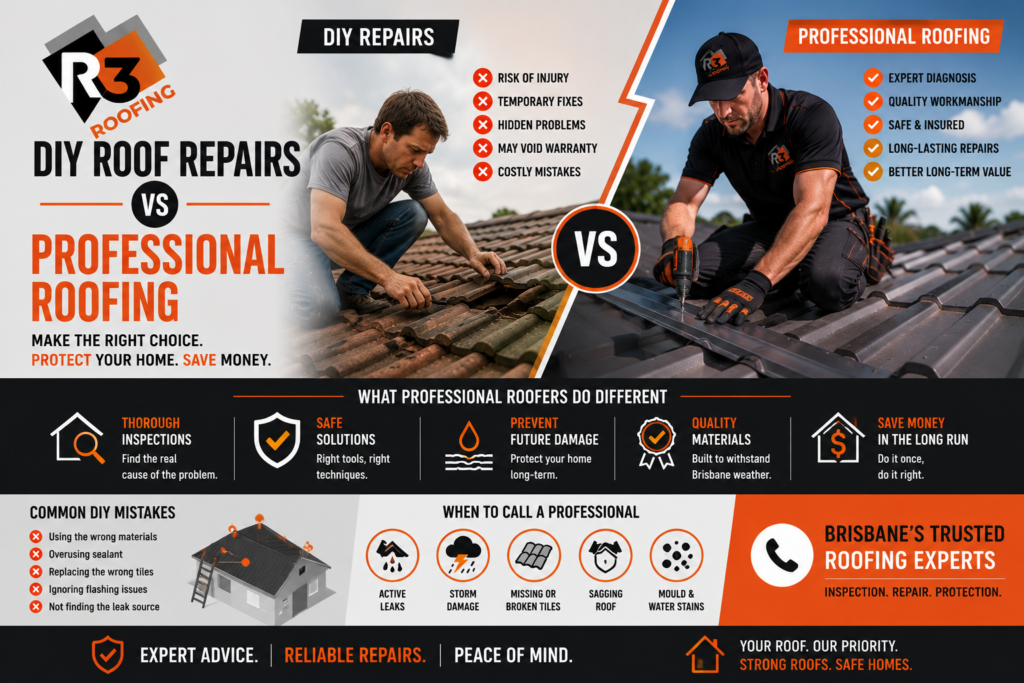
DIY roof repairs may seem like a quick way to save money, but they often end up costing more if the underlying problem isn’t identified correctly. While homeowners can safely carry out some basic roof maintenance, most roof repairs require professional knowledge, specialised equipment, and safe working practices to deliver a lasting solution.
At R3 Roofing, we’ve inspected countless roofs where a simple repair turned into a major restoration because an earlier DIY fix only addressed the visible symptom instead of the actual cause. A roof is one of the most important structural components of your home, and even a small mistake can allow water to enter and cause significant damage.
This guide compares DIY roof repairs with professional roofing services so you can make the right decision for your home, your safety, and your budget.
The biggest difference between DIY repairs and professional roofing is accuracy.
Many homeowners focus on fixing the visible problem, while experienced roofers investigate why the problem occurred in the first place.
A professional inspection considers the entire roofing system, including:
This comprehensive approach helps prevent recurring leaks and expensive future repairs.
DIY roof repairs often address visible damage only, while professional roofing focuses on identifying and repairing the root cause to provide a long-lasting solution.
The answer depends on the type of work involved.
Homeowners can usually handle basic maintenance tasks such as:
However, climbing onto a roof to repair leaks, replace roofing materials, or work near roof edges introduces significant safety risks.
Even a seemingly simple repair may hide more complex structural issues.
Basic roof maintenance can often be completed safely by homeowners, but repairs involving roofing materials, leaks, or structural components should generally be left to professionals.
There are a few maintenance tasks that most homeowners can complete safely without specialised roofing experience.
These include:
Check for:
Keeping gutters clear reduces the risk of water backing up beneath roofing materials.
Watch for:
These observations provide valuable information when arranging a professional inspection.
Homeowners can safely carry out visual inspections, monitor for leaks, and keep gutters clear, but roof repairs themselves should generally be performed by experienced professionals.
Roofing work involves more than replacing a broken tile or applying sealant.
Common DIY risks include:
Water rarely enters directly above the visible leak.
Without proper inspection techniques, homeowners often repair the wrong location while the actual leak continues causing damage.
DIY roof repairs can increase safety risks and often fail to address the true cause of the problem, leading to recurring leaks and higher repair costs.
Professional roofing services are recommended whenever the roof itself requires repair.
Call a roofer if you notice:
Professional roofers have the experience, safety equipment, and diagnostic knowledge needed to repair roofing systems correctly.
Early intervention also helps prevent structural damage and unnecessary expenses.
Professional roofers should be contacted for leaks, storm damage, missing roofing materials, sagging roofs, or any repair requiring access to the roof surface.
Many homeowners choose DIY because they hope to save money.
However, the true cost should include more than materials.
A failed DIY repair often leads to additional repair costs later.
Choosing professional repairs early frequently proves more economical over the life of the roof.
DIY repairs may appear cheaper initially, but incorrect repairs often lead to higher long-term costs. Professional roofing provides greater reliability and long-term value.
Professional roofing almost always delivers better long-term value.
Professional repairs:
DIY repairs may temporarily stop a leak but often fail to resolve the underlying issue.
The objective should always be preventing future problems rather than simply treating visible symptoms.
Professional roofing offers greater long-term value by solving underlying problems, extending roof lifespan, and reducing future repair costs.
Professional roof inspections involve much more than looking for visible damage.
Roofers inspect:
Experience allows professional roofers to identify issues that remain invisible to the untrained eye.
This thorough assessment prevents recurring leaks and identifies developing problems before they become expensive.
Professional roof inspections identify hidden moisture damage, flashing failures, structural issues, and other defects that homeowners often overlook.
Many recurring roof problems begin with well-intentioned DIY repairs.
Common mistakes include:
These mistakes can increase repair complexity and raise future costs.
Incorrect DIY techniques often worsen roofing problems by damaging materials, masking leaks, or failing to repair the true source of water entry.
Selecting the right roofing contractor is just as important as deciding against DIY repairs.
Look for a contractor who:
At R3 Roofing, we believe homeowners deserve honest advice and practical solutions that protect their property over the long term.
Choose a roofing contractor with experience, transparent pricing, quality workmanship, and a strong reputation for diagnosing and repairing roofing problems correctly.
While DIY roof repairs may appear attractive from a cost perspective, they often involve significant safety risks and can overlook the underlying cause of roofing problems. A temporary repair might stop visible water for a short period, but hidden damage can continue spreading beneath the roof.
Professional roofing delivers far more than a repair—it provides accurate diagnosis, safe workmanship, long-term protection, and peace of mind. At R3 Roofing, our goal is always to identify the real problem, recommend the most practical solution, and help homeowners avoid unnecessary future repair costs.
Generally, no for anything beyond basic maintenance. Cleaning gutters or carrying out a visual inspection is usually safe, but repairing leaks or replacing roofing materials without the right knowledge often creates bigger problems. We've inspected many roofs where a temporary DIY fix allowed water to continue damaging the roof structure.
It may seem cheaper initially, but not always in the long run. For example, a homeowner might spend less on materials but misdiagnose the leak. The water continues entering the roof, resulting in timber damage and a much larger repair bill later.
Homeowners can safely monitor ceilings for leaks, inspect the roof from ground level, and keep gutters free of debris where it is safe to do so. These simple maintenance tasks help identify problems early without introducing unnecessary safety risks.
Immediately after noticing leaks, storm damage, missing roofing materials, or sagging roof sections. Early professional intervention usually reduces repair costs and helps prevent structural damage.
Because they frequently treat the visible symptom instead of the underlying cause. A water stain inside the home doesn't always indicate where the leak begins. Professional roofers trace moisture back to its true entry point before carrying out repairs.
Professional inspections identify small issues before they become major repairs. We've often found cracked flashing, loose ridge capping, or damaged roof valleys during routine inspections—problems that could have become expensive structural repairs if left unnoticed.