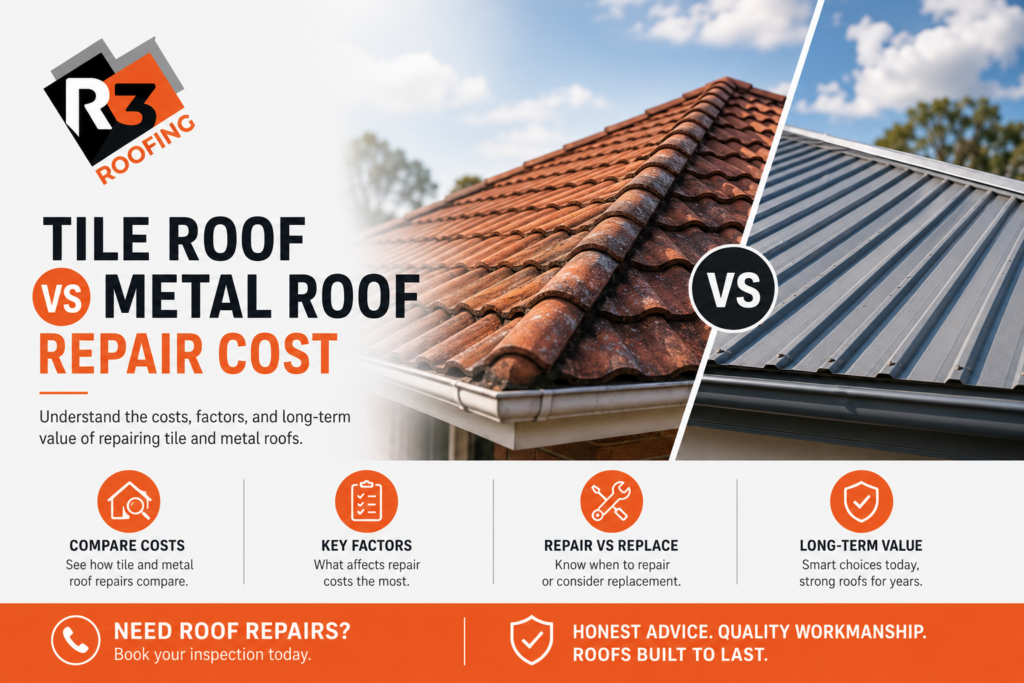
The cost of repairing a roof depends on far more than whether it is tiled or metal. Factors such as the extent of the damage, roof accessibility, labour requirements, material availability, and the age of the roof all influence the final repair cost. Understanding these differences helps homeowners choose the most cost-effective solution instead of simply the cheapest quote.
One of the questions we hear most often at R3 Roofing is whether tile roofs are more expensive to repair than metal roofs. The answer isn’t always straightforward. Both roofing systems have unique repair methods, common failure points, and long-term maintenance requirements.
In this guide, I’ll compare tile roof vs metal roof repair cost, explain what influences pricing, and help you understand which roofing system offers better value over the life of your home.
Tile and metal roofs require different repair techniques, materials, and labour.
Tile roofs typically involve replacing cracked tiles, repointing ridge caps, repairing valleys, or fixing flashing. Metal roofs often require repairing rusted sheets, replacing fasteners, resealing joints, or addressing corrosion.
Neither roofing system is always cheaper to repair. The final cost depends on the specific issue rather than the roofing material alone.
Some repairs involve replacing only a few components, while others require extensive restoration after years of neglected maintenance.
Tile roof and metal roof repair costs depend on the type of damage, accessibility, roof age, and repair complexity rather than roofing material alone.
In many situations, minor tile repairs can cost less than extensive metal roof repairs. However, the opposite is also true.
Generally:
Common repairs include:
Common repairs include:
The cost difference often comes down to labour time and the availability of matching materials.
Both roofing systems can be economical to repair when problems are identified early. Delaying maintenance usually increases repair costs regardless of roof type.
Several variables influence tile roof repair cost.
These include:
Older roofs sometimes require additional work because replacement tiles may be difficult to source.
Timely maintenance helps prevent isolated repairs from becoming major restoration projects.
Tile roof repair costs depend on tile availability, roof accessibility, damage severity, and the condition of surrounding roofing components.
Metal roof repair costs vary according to the type of roofing system and the extent of deterioration.
Pricing is commonly influenced by:
A small corrosion issue can usually be repaired quickly, while widespread rust may require replacing multiple roofing sheets.
Metal roof repair costs depend on corrosion, roof condition, flashing, fasteners, and repair accessibility. Early maintenance keeps repair costs significantly lower.
Many homeowners ask, how much does it cost to repair a tile roof?
The answer depends on the overall condition of the roofing system.
Minor repairs often involve replacing individual tiles or repairing ridge capping.
More extensive repairs may include:
The longer a damaged tile remains unrepaired, the greater the likelihood of secondary water damage inside the roof cavity.
The cost to repair a tile roof depends on whether the issue is isolated or widespread. Prompt repairs usually prevent more expensive structural work.
The answer depends on both the quantity and condition of the damaged tiles.
Factors affecting repair costs include:
Professional inspections also check whether the underlying roof membrane or battens have suffered water damage.
The cost to repair roof tiles varies according to the number of damaged tiles, roof accessibility, and the condition of the supporting roof structure.
The cost of repair broken roof tiles depends on how early the issue is discovered.
Broken tiles expose the underlayment to rainwater and may eventually lead to:
Replacing broken tiles immediately is usually one of the most affordable roofing repairs available.
Ignoring them often results in far more expensive repairs later.
Broken roof tiles are inexpensive to repair when addressed early. Delayed repairs often lead to costly internal water damage.
The cost to repair metal roof systems varies depending on the type of repair required.
Common repairs include:
Extensive corrosion generally costs more to repair than isolated fastener or flashing issues.
Routine inspections help identify corrosion before replacement becomes necessary.
Metal roof repair costs depend on corrosion levels, sheet condition, flashing integrity, and roof accessibility. Early intervention significantly reduces repair expenses.
Metal roof leak repair cost depends on identifying the actual source of the water entry.
Leaks commonly originate from:
Professional inspections often reveal that the visible leak is not located directly above the water stain inside the home.
Repairing the true source prevents recurring leaks.
Metal roof leak repair costs vary according to leak location and damage severity. Accurate diagnosis prevents repeated repair expenses.
Both roofing systems can provide decades of reliable performance when maintained properly.
Tile roofs generally perform exceptionally well when:
Metal roofs typically last longer when:
Regular inspections extend the lifespan of both roofing systems far more effectively than reactive repairs.
Tile and metal roofs both deliver long service lives when maintained regularly. Preventative maintenance extends roof lifespan regardless of roofing material.
The decision depends on your roof’s overall condition.
Repairs are generally recommended when:
Replacement may be more practical when:
At R3 Roofing, we always recommend the solution that delivers the greatest long-term value rather than simply the largest project.
Repairs are often the most economical solution for isolated roof damage, while replacement becomes worthwhile when deterioration is widespread or ongoing.
Choosing between a tile roof and a metal roof isn’t simply about repair costs. Both roofing systems can be affordable to maintain when issues are identified early and repaired correctly. The biggest factor influencing long-term costs isn’t the roofing material—it’s how quickly problems are addressed.
Whether you own a tile roof or a metal roof, regular inspections and preventative maintenance will always cost less than allowing small problems to develop into major structural repairs. Investing in professional assessments helps extend roof lifespan while reducing unexpected repair expenses.
Neither is consistently cheaper. For example, replacing a few cracked roof tiles is often inexpensive, while repairing extensive metal corrosion can be more costly. On the other hand, replacing multiple damaged tiles across an older roof may require more labour than repairing a minor metal roof leak.
The cost depends on the size of the repair and the roof's condition. Replacing a handful of damaged tiles usually costs much less than repairing water damage beneath the roofing system. A professional inspection determines the full scope of work.
The biggest factors include corrosion, flashing condition, fastener failure, roof access, and the number of damaged sheets. A small sealant failure is generally much simpler to repair than widespread rust affecting multiple roof sections.
Yes. Broken tiles allow water to reach the roof cavity, where it can damage insulation, timber framing, and ceilings. Replacing damaged tiles early is one of the most cost-effective ways to protect your home.
The best approach is regular roof inspections and preventative maintenance. We regularly find small roofing issues that homeowners never noticed. Repairing these early usually prevents far more expensive structural repairs later.
Repairing is usually the better option when damage is limited. However, if your roof experiences repeated leaks, extensive deterioration, or widespread structural issues, replacement may provide better long-term value.