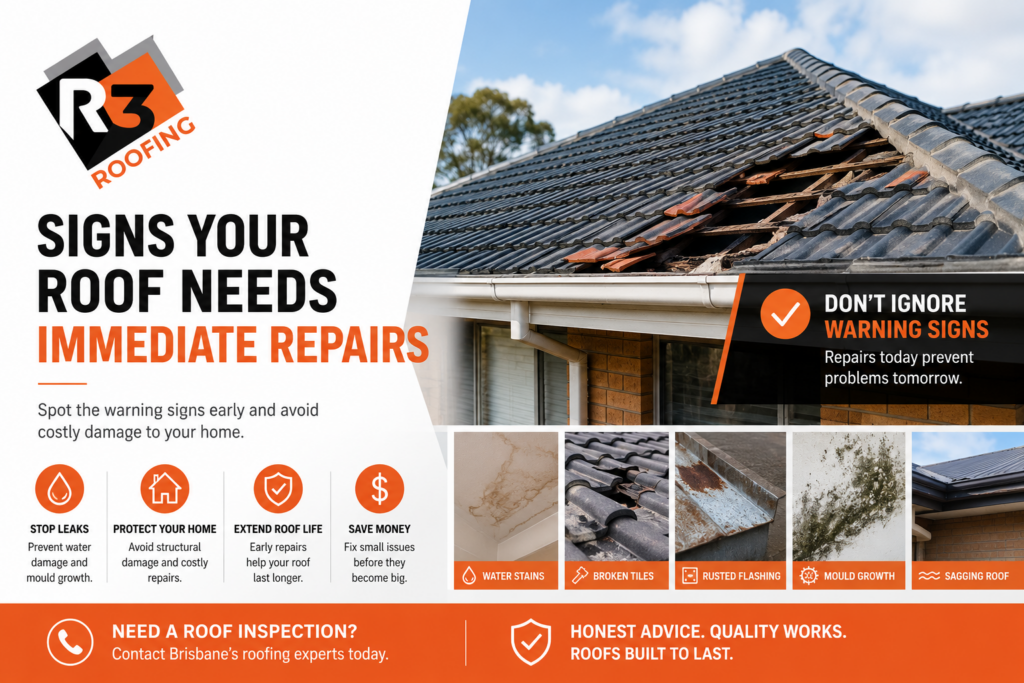
Your roof rarely fails without warning. Water stains, cracked tiles, sagging sections, mould growth, and unexpected energy bill increases often indicate that your roof needs urgent attention. Acting early can save thousands in structural repairs, prevent internal damage, and extend the lifespan of your roofing system.
As roofing professionals, we often meet homeowners who noticed small roofing issues months earlier but delayed action because the damage seemed minor. Unfortunately, roofing problems rarely stay small. A minor leak can quickly turn into timber rot, insulation damage, mould growth, and costly repairs.
In this guide, we explain the most common signs your roof needs immediate repairs, how to identify serious roofing issues early, and when it makes sense to consider roof restoration services instead of waiting for a complete replacement.
Most roofs provide visible warning signs before significant damage occurs. Recognising these signs early allows you to arrange a roof repairs service before the problem spreads.
Common warning signs include:
Many homeowners ask us, “how can I get help to fix my roof” when these issues start becoming noticeable. The answer is simple: arrange a professional roof inspection immediately. The sooner the issue is identified, the lower the repair cost is likely to be.
The earliest signs of roof damage include leaks, missing tiles, mold, sagging areas, and rising energy costs. Addressing these issues quickly through professional roofing repair services helps prevent expensive structural damage.
A small leak is one of the most dangerous roofing problems because it often remains hidden while causing ongoing damage.
Water can travel through roof cavities, insulation, ceiling materials, and wall frames before becoming visible inside your home. By the time you notice a stain, significant damage may already exist.
Common consequences of untreated leaks include:
This is why leaking roof repairs Brisbane homeowners often delay can eventually become major restoration projects.
Professional roof leak services can identify the exact source of water entry and prevent further damage before repairs become more extensive.
Even small roof leaks can cause major structural damage over time. Prompt roof leak repair prevents timber rot, mould growth, insulation damage, and costly restoration work.
Water stains are one of the clearest indicators that your roof requires immediate attention.
You may notice:
These signs usually indicate water penetration from damaged roofing materials, flashing failures, blocked gutters, or deteriorated roof valleys.
Many homeowners mistakenly repaint affected areas without addressing the underlying cause. The stain disappears temporarily, but the leak continues damaging the structure.
Our recommendation is always to investigate the roofing source first before repairing internal finishes.
Water stains, peeling paint, and damp patches often indicate active roof leaks. Fixing the roofing issue first prevents recurring internal damage and costly repairs.
Roof tiles are your home’s first line of defence against weather.
When tiles become:
water can enter beneath the roof surface and damage the underlying structure.
Strong winds, storms, ageing materials, and natural expansion and contraction can all contribute to tile damage.
Many homeowners only notice missing tiles after severe weather events, but regular inspections can identify these problems much earlier.
Professional roofing repair services can replace damaged sections before widespread water penetration occurs.
Missing or damaged roof tiles expose the underlying roof structure to water damage. Early repairs prevent leaks and help preserve the overall lifespan of the roof.
Yes. A sagging roof should always be treated as a serious warning sign.
Roof sagging may result from:
A sagging roof often indicates that the supporting framework has weakened and requires immediate professional assessment.
Ignoring a sagging section can lead to major structural repairs or even partial roof failure.
If you notice any visible dips or uneven roof lines, arrange an inspection as soon as possible.
Roof sagging often indicates structural weakening caused by moisture damage or ageing materials. Immediate inspection helps prevent major structural failures.
Many homeowners are surprised to learn that roofing problems can affect energy efficiency.
Damaged roofing materials may allow:
As a result, heating and cooling systems must work harder to maintain comfortable indoor temperatures.
Roof leaks can also damage insulation, reducing its effectiveness and increasing energy consumption.
A roof inspection often reveals hidden issues contributing to unnecessary energy costs.
Damaged roofing systems can reduce insulation efficiency and increase heating and cooling costs. Roof repairs often improve overall home energy performance.
One of the most common questions homeowners ask is how to know when your roof needs replaced.
While many roofing issues can be repaired, replacement may become the better option when:
A professional inspection can determine whether repairs, restoration, or replacement offers the best long-term value.
In many situations, roof restoration services can significantly extend roof life without the expense of a full replacement.
If your roof experiences repeated leaks, extensive damage, or age-related deterioration, replacement may be more cost-effective than ongoing repairs. A professional assessment helps determine the right solution.
The answer depends largely on roofing material, installation quality, maintenance history, and environmental exposure.
Average lifespans include:
Roofing Material | Typical Lifespan |
Concrete Tiles | 40–60 Years |
Terracotta Tiles | 50–100 Years |
Metal Roofing | 30–50 Years |
Colorbond Roofing | 30–50 Years |
Asphalt Shingles | 20–30 Years |
However, lifespan estimates assume proper maintenance and timely repairs.
Regular inspections and prompt roof repairs service can often extend the useful life of your roof well beyond standard expectations.
Roof lifespan varies by material, maintenance, and environmental conditions. Regular inspections and repairs can significantly extend roof longevity.
There is no fixed replacement schedule for every roof.
Instead, replacement depends on:
Most homeowners should arrange professional roof inspections every few years and after major weather events.
Many roofs that appear old can remain serviceable for years with strategic repairs and roof restoration services.
The goal is not replacing a roof based solely on age but replacing it when performance, safety, and cost-effectiveness justify the investment.
Roofs do not require replacement on a fixed timeline. Professional inspections help determine whether repairs, restoration, or replacement is the most practical option.
You should contact roofing professionals immediately if you notice:
Many homeowners search for help with roof repairs after significant damage has already occurred. Early intervention almost always reduces repair costs and prevents secondary structural issues.
Professional roof leak services and roofing repair services provide accurate diagnostics, safe repairs, and long-term protection for your property.
Call roofing professionals as soon as signs of damage appear. Early repairs reduce costs, prevent structural deterioration, and extend roof lifespan.
Your roof protects everything underneath it, which is why even minor issues deserve prompt attention. Water stains, leaks, cracked tiles, sagging areas, mould growth, and increasing energy bills all indicate that your roof may require immediate repairs.
The good news is that most roofing problems can be addressed effectively when caught early. Whether you need a simple roof leak repair, comprehensive roof repairs service, or expert roof restoration services, acting quickly helps protect your home, reduce costs, and extend the life of your roof.
Yes, the best way to get help is to arrange a professional roof inspection as soon as possible. We regularly see homeowners attempt temporary fixes that only hide the problem. A qualified roofing specialist can identify the actual cause of the damage and recommend the most cost-effective repair solution before the issue becomes more serious.
Your roof may need replacing when repairs become frequent, leaks appear in multiple locations, or structural deterioration becomes widespread. For example, if you're repairing different sections every year and new leaks continue appearing, investing in replacement may provide better long-term value than ongoing repairs.
Most roofs do not follow a fixed replacement schedule. A well-maintained tile roof can last several decades beyond its expected lifespan, while a neglected roof may require replacement much earlier. Regular inspections are the best way to determine your roof's condition.
The timeline depends on roofing material, maintenance, weather exposure, and installation quality. For instance, a properly maintained metal roof may last 40 years or more, while severe storm damage could shorten the lifespan considerably. Professional assessments provide the most accurate answer.
Yes, in many cases roof restoration services can significantly extend roof life. We often restore roofs that homeowners initially believed required replacement. Cleaning, repairs, resealing, and protective coatings can improve performance and postpone major replacement costs for many years.
Immediately after noticing signs of water entry. Even a small leak can cause hidden damage inside roof cavities and wall structures. Prompt roof leak repair prevents larger repair bills and protects the integrity of your home.