Most roof leaks do not happen suddenly. They develop over time due to damaged roofing materials, ageing components, blocked drainage systems, poor workmanship, or storm-related damage. Identifying the cause early can prevent expensive structural repairs, protect your property, and significantly extend the life of your roof.
One of the most common concerns homeowners have is finding water stains on ceilings or damp patches on walls without knowing where the water is entering. In many cases, the visible leak is only a symptom of a larger roofing issue.
At R3 Roofing, we regularly inspect roofs across Brisbane and find that most leaks originate from a handful of common problems. Understanding these issues helps homeowners take action before minor damage turns into a major repair project.
Roof leaks can develop for several reasons, but some causes appear far more frequently than others.
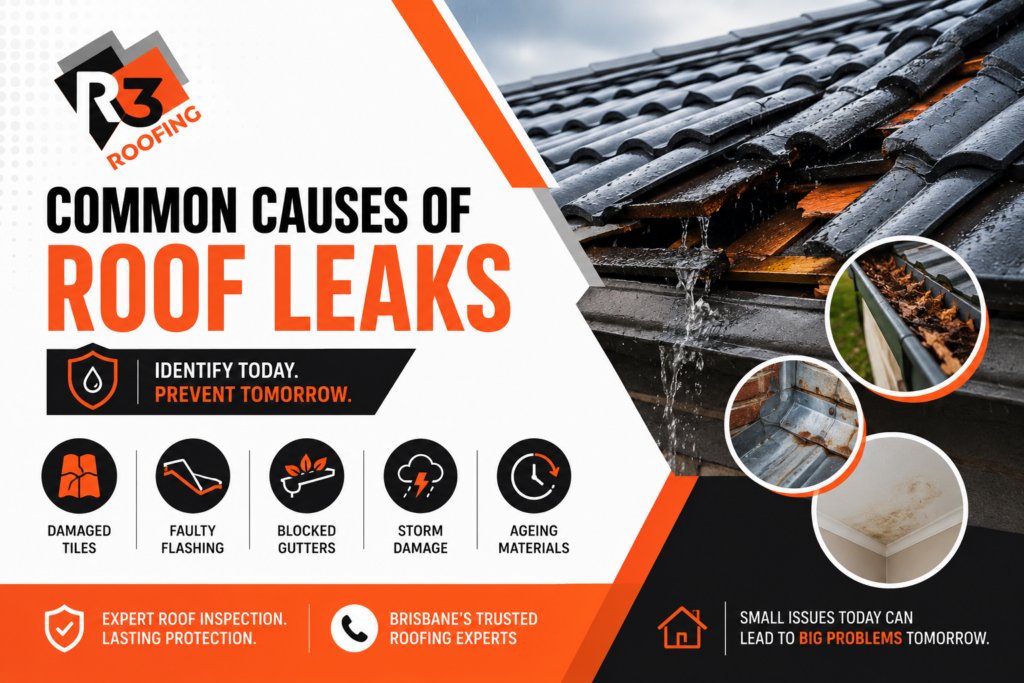
The most common causes of roof leaks include:
Many of these issues begin as small defects that remain unnoticed until water enters the home.
The most common causes of roof leaks include damaged tiles, faulty flashing, blocked gutters, ageing roofing materials, storm damage, and poor installation. Early identification prevents extensive water damage and costly repairs.
The most common cause of roof leaks is damaged roofing materials.
For tile roofs, cracked or displaced tiles often allow water to penetrate beneath the roof surface. For metal roofs, corrosion, loose fasteners, and deteriorated sealants frequently create leak points.
Another major contributor is damaged flashing. Flashing protects vulnerable roof areas such as chimneys, skylights, valleys, and wall junctions. When flashing fails, water can enter even if the rest of the roof remains in good condition.
Many homeowners assume a leak originates directly above the visible water stain. In reality, water often travels through the roof cavity before becoming visible indoors.
Damaged roofing materials and faulty flashing are the most common causes of roof leaks. Water often travels significant distances before becoming visible inside the home.
Roof tiles form the protective outer barrier of your roofing system.
When tiles become:
water gains access to the underlayment and roof structure beneath.
Strong winds, hail, falling branches, and natural ageing can all contribute to tile damage. Even a single broken tile can allow water to enter during heavy rain.
In many cases, homeowners only discover the issue after noticing ceiling stains or mould growth.
Regular inspections and timely repairs remain the most effective way to prevent leaks caused by damaged tiles.
Broken or cracked roof tiles create direct entry points for water. Replacing damaged tiles promptly helps prevent leaks, structural damage, and costly repairs.
Yes. Damaged flashing is one of the most overlooked causes of roof leaks.
Flashing protects areas where roofing materials meet other structures, including:
Over time, flashing can:
When flashing fails, water can bypass the roofing system entirely and enter the roof cavity.
Professional roofing leak repair often focuses on flashing because it is a frequent source of recurring leaks.
Flashing failure is a leading cause of roof leaks. Damaged flashing allows water to enter vulnerable roof junctions even when roofing materials remain intact.
Gutters play a critical role in directing water away from your roof.
When gutters become blocked with:
water can overflow and back up underneath roofing materials.
This issue is particularly common during Brisbane’s heavy rainfall events.
Blocked gutters may also increase moisture levels around roof edges, leading to timber deterioration and mould growth.
Routine gutter maintenance is one of the simplest ways to reduce leak risks.
Blocked gutters prevent proper water drainage and can force water underneath roofing materials. Regular gutter cleaning helps minimise roof leak risks.
As roofing materials age, their ability to resist water naturally declines.
Common signs of ageing include:
Older roofs are more vulnerable to leaks, particularly after severe weather events.
Many Brisbane homeowners choose roof restoration services Brisbane providers offer as a way to extend roof lifespan and address age-related deterioration before replacement becomes necessary.
Ageing roofing materials gradually lose their protective properties, increasing the risk of leaks. Restoration can often address age-related issues and extend roof life.
Absolutely.
Even high-quality roofing materials can fail if installation standards are poor.
Common installation issues include:
Some leaks appear shortly after installation, while others remain hidden for years before causing noticeable damage.
Professional roofing services in Brisbane should always follow manufacturer guidelines and industry best practices to ensure long-term performance.
Poor workmanship can create long-term leak risks regardless of roofing material quality. Proper installation remains essential for a watertight roofing system.
Metal roofing systems are highly durable but still require maintenance.
Common causes of metal roof leaks include:
Without maintenance, small issues can eventually develop into larger leaks.
Many homeowners contact us for metal roof repairs after noticing rust spots or water stains inside the property. Early intervention often prevents extensive repairs.
Metal roofs typically leak due to corrosion, loose fasteners, damaged sealants, or storm-related damage. Regular inspections help identify problems before leaks develop.
Brisbane’s weather can place significant stress on roofing systems.
Storm-related leak causes include:
Even roofs that appear structurally sound may develop vulnerabilities after severe weather events.
Post-storm inspections help identify hidden damage before leaks become visible indoors.
Heavy storms can damage tiles, flashing, gutters, and roofing materials, creating leak pathways that may not be immediately visible.
Early detection significantly reduces repair costs.
Common signs include:
Many leaks remain hidden for months before becoming obvious. Professional inspections often reveal problems before visible symptoms appear.
Water stains, mould, peeling paint, damaged tiles, and rust are common indicators of roof leaks. Early detection helps minimise repair costs and structural damage.
The correct repair depends entirely on the cause of the leak.
Common repair solutions include:
Attempting DIY repairs without identifying the source often leads to recurring problems.
A professional leaking roof specialist can accurately diagnose the issue and implement a long-term repair solution.
Roof leak repairs vary depending on the source of water entry. Professional diagnosis ensures the underlying problem is fixed rather than temporarily covered up.
You should contact a specialist as soon as you notice signs of water intrusion.
Delaying repairs can lead to:
Professional inspections identify hidden issues and provide a clear repair strategy before damage worsens.
A leaking roof specialist should be contacted immediately after signs of a leak appear. Early intervention prevents more extensive and expensive repairs.
Yes, in many cases.
Roof restoration services Brisbane homeowners choose often include:
For tile roofs, tile roof painting can help restore weather resistance and improve durability when combined with necessary repairs.
Restoration addresses existing vulnerabilities and helps reduce future leak risks.
Roof restoration can prevent future leaks by repairing damaged areas, improving weather resistance, and extending roof lifespan through coatings and maintenance.
Understanding the common causes of roof leaks helps homeowners identify problems before they become major expenses. Damaged tiles, faulty flashing, blocked gutters, ageing materials, poor installation, and storm damage remain the leading causes of leaks across Brisbane properties.
The key is acting early. Whether your roof requires roofing leak repair, metal roof repairs, roof painting services, or comprehensive roof restoration services Brisbane homeowners trust, addressing issues promptly protects your property and extends the life of your roof.
Damaged roofing materials are the most common cause of roof leaks. For example, a cracked tile or deteriorated flashing can allow water to enter the roof cavity during rain. We often find that a relatively small defect causes a leak that homeowners initially assume is a major roofing failure.
The leak source must be identified and repaired correctly. For instance, replacing a broken tile may solve one leak, while another leak may require flashing replacement. Effective repairs focus on the root cause rather than the visible symptom.
Look for early warning signs such as ceiling stains, peeling paint, mould growth, damp smells, or damaged roofing materials. Many homeowners notice a small water stain months before a major leak develops. Early inspections help identify hidden issues before extensive damage occurs.
Yes, roof restoration can often eliminate existing leak risks. For example, replacing damaged tiles, repairing pointing, resealing penetrations, and applying protective coatings can significantly improve roof performance and water resistance.
You should hire a specialist immediately after noticing signs of water intrusion. A small leak may appear harmless, but we regularly see cases where delayed repairs lead to structural timber damage, mould growth, and much higher repair costs.
No, both roof types can perform exceptionally well when maintained properly. Metal roofs usually leak due to corrosion, failed fasteners, or damaged sealants, while tile roofs typically leak because of cracked tiles or deteriorated pointing. Regular maintenance helps prevent issues regardless of roof type.