Choosing between Colorbond and tile roofing isn’t simply about appearance—it affects your home’s durability, maintenance requirements, energy efficiency, storm resistance, and long-term value. Both roofing systems perform well when professionally installed, but the right choice depends on your home’s design, budget, lifestyle, and long-term maintenance expectations.
One of the most common questions we receive at R3 Roofing is whether homeowners should install a Colorbond roof or choose traditional roof tiles. Both options have proven themselves across Australian homes for decades, yet they offer very different advantages.
Rather than recommending one solution for every property, we help homeowners understand how each roofing material performs under Brisbane’s climate and which option delivers the best value for their specific needs. This guide compares Colorbond vs tile roofs across the factors that matter most.
Colorbond and tile roofing both provide reliable weather protection, but they differ significantly in construction, maintenance, lifespan, and installation.
Here’s a quick comparison:
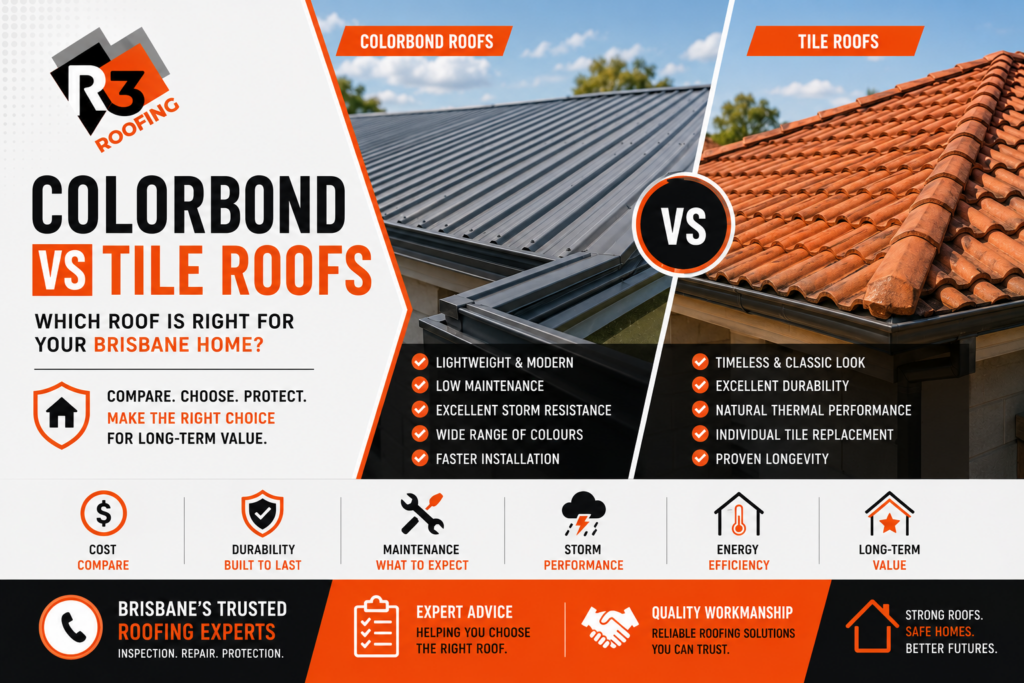
Feature | Colorbond Roofing | Tile Roofing |
Weight | Lightweight | Heavier |
Appearance | Modern and contemporary | Traditional and classic |
Maintenance | Low | Moderate |
Storm Resistance | Excellent | Very good |
Colour Options | Wide range | Wide range |
Installation Speed | Generally faster | Usually slower |
Repair Method | Sheet or flashing repairs | Individual tile replacement |
Neither roofing system is universally better. The ideal choice depends on your home’s structure and your long-term priorities.
Colorbond and tile roofs both provide excellent protection, but they differ in weight, maintenance, installation, durability, appearance, and long-term ownership costs.
Brisbane’s climate includes intense sun, heavy rainfall, strong winds, hail, and occasional severe storms.
Both roofing systems perform well when professionally installed, but each offers different advantages.
Colorbond is often preferred for:
Tile roofs are commonly chosen for:
The best roofing material depends on your property’s design, budget, and maintenance preferences.
Both Colorbond and tile roofs suit Brisbane’s climate. Colorbond offers lightweight durability and low maintenance, while tiles provide traditional aesthetics and excellent long-term performance.
Colorbond roofing has become one of Australia’s most popular roofing systems.
Its benefits include:
Its lower weight places less stress on the home’s structure.
Colorbond performs well during heavy rain, strong winds, and extreme temperatures.
Routine inspections and occasional cleaning are generally all that’s required.
It suits contemporary architectural styles and is available in numerous colours.
Large roofing sheets often allow quicker installation compared with individual roof tiles.
These advantages make Colorbond an excellent option for many Brisbane homeowners.
Colorbond roofing offers lightweight construction, low maintenance, weather resistance, modern aesthetics, and efficient installation.
Tile roofing remains one of Australia’s most recognisable roofing materials.
Its strengths include:
Tiles complement heritage and classic home designs.
Damaged tiles can often be replaced individually.
Well-maintained tile roofs can provide decades of reliable service.
Roof tiles naturally help regulate roof temperatures due to their thermal mass.
Many homeowners also appreciate the timeless appearance that tiled roofs provide.
Tile roofs offer classic appearance, long lifespan, thermal performance, and the ability to replace individual damaged tiles.
Roofing costs depend on:
While installation costs vary between projects, homeowners should also consider:
Looking only at the initial installation price rarely provides the full picture.
Long-term ownership costs are equally important.
Comparing Colorbond and tile roofs should include installation, maintenance, repairs, lifespan, and long-term ownership costs rather than upfront pricing alone.
Both roofing systems are capable of lasting for decades when professionally installed and properly maintained.
Roof lifespan depends on:
Regular inspections significantly extend the life of both roofing systems.
Prompt repairs also prevent minor problems from developing into major restoration projects.
Both Colorbond and tile roofs offer excellent longevity when professionally installed, regularly maintained, and repaired promptly.
Colorbond generally requires less routine maintenance.
Typical maintenance includes:
Tile roofs may additionally require:
Both roofing systems benefit from annual inspections to identify developing issues early.
Colorbond roofing typically requires less maintenance than tile roofing, although both benefit from regular inspections and preventative maintenance.
Storm performance depends more on installation quality than roofing material alone.
Colorbond performs well because:
Tile roofs perform well because:
Regardless of roofing type, storm damage inspections remain essential after severe weather.
Both roofing systems perform well during Brisbane storms when installed correctly, although regular inspections remain important after severe weather.
Energy efficiency depends on several factors beyond roofing material.
These include:
Colorbond roofing offers specialised coatings that help reflect solar heat.
Tile roofs naturally provide thermal mass that slows heat transfer.
Both systems can deliver excellent energy performance when combined with quality insulation.
Both Colorbond and tile roofs can improve energy efficiency when paired with effective insulation, ventilation, and appropriate roof design.
There is no single answer for every homeowner.
Choose Colorbond if you prioritise:
Choose tile roofing if you value:
At R3 Roofing, we recommend the roofing system that best matches your property’s design, budget, and long-term goals rather than promoting one option for every project.
The right roofing material depends on your home’s style, maintenance expectations, budget, and long-term objectives. Professional advice helps determine the best option.
The decision between Colorbond and tile roofing comes down to your individual priorities. Both systems provide outstanding protection when professionally installed, but they offer different advantages in terms of maintenance, appearance, weight, energy efficiency, and long-term ownership.
If you prefer a lightweight, modern roofing system with minimal maintenance, Colorbond is an excellent choice. If you value timeless aesthetics and the character of traditional roofing, tile roofs continue to be a reliable and attractive option. At R3 Roofing, we help Brisbane homeowners compare both roofing systems objectively so they can make confident, informed decisions that deliver long-term value.
Neither is universally better. Colorbond suits homeowners looking for a lightweight, low-maintenance roof, while tile roofing appeals to those who prefer traditional aesthetics and excellent longevity. The right choice depends on your property's design and your long-term priorities.
Yes, both roofing systems can last for decades when professionally installed and properly maintained. We've inspected many Brisbane homes where both Colorbond and tile roofs remained in excellent condition because routine maintenance had been carried out consistently.
Generally, Colorbond. Its lower maintenance requirements often reduce ongoing repair needs. Tile roofs may occasionally require replacing cracked tiles or maintaining ridge capping over time.
Both perform very well when installed correctly. Professional installation, secure flashing, and regular maintenance have a greater impact on storm performance than the roofing material itself.
Both roofing systems can provide excellent energy efficiency. Colorbond reflects solar heat through advanced coatings, while tiles provide natural thermal mass. Proper insulation and ventilation remain equally important regardless of roofing material.
Both can improve property value. A professionally installed roof in excellent condition generally contributes more to resale value than the specific roofing material chosen.